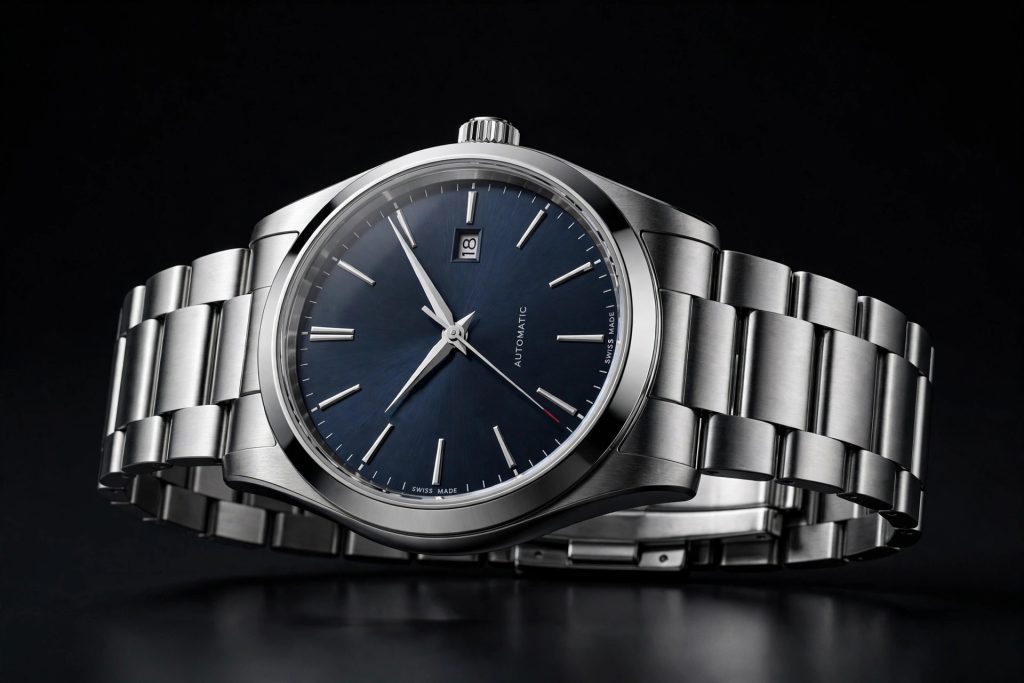
Forget specifications for a moment and answer a simpler question: what will this watch’s life actually look like on your wrist? The automatic-versus-quartz debate resolves itself the moment you examine your routine, because each technology quietly suits a different kind of owner. A movement that delights a daily wearer can frustrate a person who rotates five watches, and precision that thrills an engineer can bore a romantic. This guide skips the laboratory comparison and works through five real ownership scenarios instead. Find the person who resembles you, and the recommendation at the end replaces a week of forum arguments with a two-minute decision.
Scenario One: The Daily Office Wearer
You wear one watch from breakfast to bedtime, five or six days a week, mostly at a desk. An automatic thrives in exactly this pattern. Your arm keeps it wound, its slightly thicker case sits fine under a cuff, and its gentle daily ritual of setting nothing and checking nothing becomes invisible. You also gain the most from it aesthetically, because an automatic’s seconds sweep and mechanical depth reward the person who looks at their watch all day.
Quartz works here too, but it underuses its own advantages. You will rarely benefit from grab-and-go convenience when the watch never leaves your wrist, so choose the automatic and enjoy the machine.
Scenario Two: The Rotating Collector
Your watch changes with your mood, and some pieces rest for a week between outings. Quartz was invented for you. It waits in the box fully set and correct, asks for no winder, no winding, and no morning fiddling when you are already late. Every reunion feels effortless.
Automatics punish rotation unless you invest in watch winders or enjoy the resetting ritual each morning. Many collectors accept exactly that trade, treating the winding as conversation with the object. Decide which personality is yours honestly: if setting a stopped watch annoys you even slightly, your future collection should lean quartz, with one automatic as the daily piece that never sleeps.
Scenario Three: The One-Watch Person
You intend to buy a single good watch and wear it everywhere for a decade. This is the hardest brief, and quartz usually wins it on points. It shrugs off the gym, the garden, and the swimming pool within its water rating, needs only a battery every few years, and never demands a costly service holiday. Modern solar quartz removes even the battery errand, charging from ordinary light and running for months in darkness.
Choose an automatic here only if its character genuinely matters to you and your life is gentle on objects. A one-watch automatic accumulates servicing costs and desk-diving scars alike, though its defenders call those scars a biography. Both readings are true; pick the biography or the tool.
Scenario Four: The Sport and Outdoor User
Your watch times runs, survives knocks, and meets weather. Quartz dominates this world for structural reasons. Electronic movements tolerate impacts that would send a mechanical balance wheel to the repair bench, and they power the functions sport actually uses: chronographs accurate to fractions, alarms, timers, compasses, and altimeters.
Mechanical loyalists can find automatics built for abuse, but they pay more for less information and accept accuracy that drifts under shock. For training and expeditions, take the quartz, spend the savings on shoes, and let sentiment sit this category out.
Scenario Five: The Gift Buyer
You are choosing for someone else, which reverses several instincts. Quartz makes the safer gift for anyone whose enthusiasm you cannot guarantee. It arrives running, stays correct, and never makes the recipient feel they have adopted a pet that needs feeding with wrist time. A neglected automatic stops, and a stopped gift communicates failure every time its owner glances at it.
Give an automatic only to someone who has expressed interest in watches themselves, ideally while pointing at one. Then the ritual becomes the present, and the winding they must do is participation, not homework.
The Hybrids Worth Knowing
Two technologies blur the old border usefully. Solar quartz replaces battery changes with light charging, delivering quartz accuracy with near-zero upkeep for ten years or more between capacitor services. Mecha-quartz chronographs pair a quartz timekeeping heart with a mechanical-feeling chronograph module, giving you a smooth sweeping timer hand and a satisfying reset snap at quartz prices and reliability. Spring-driven and kinetic designs exist too, at higher prices, for owners who want mechanical romance with quartz-grade precision.
The Decision, in Words
Run this flow. Will the watch be worn almost daily? If yes, and you enjoy mechanical objects, choose automatic; if daily, but you value set-and-forget ease, choose quartz. Will it be worn occasionally? Choose quartz, or solar quartz if you hate battery errands entirely. Is it mainly for sport? Quartz. Is it a gift for a non-enthusiast? Quartz. Does a ticking-versus-sweeping seconds hand genuinely move you? Then follow that feeling, because you will look at this object ten thousand times. Lifestyle decides first; specifications merely confirm the choice your routine already made.